
|
|
|
|
|
{{node.getProperty('name')}}
{{node.getProperty('organisation')}}
{{node.getProperty('street')}} {{node.getProperty('street2')}} {{node.getProperty('zip')}} {{node.getProperty('city')}} {{node.getProperty('email')}} Details |
{{node.getProperty('organisation')}} {{node.getProperty('street')}} {{node.getProperty('street2')}} {{node.getProperty('zip')}} {{node.getProperty('city')}} {{node.getProperty('email')}} |
Details |
|---|
| {{g.getLabel()}} | |
|---|---|
|
{{node.getProperty('title')}}
|
|
| mehr anzeigen von |
| Beschreibung | Nummer | Beginn | Buchbar | Typ | |||||||||||
|---|---|---|---|---|---|---|---|---|---|---|---|---|---|---|---|
|
|
|||||||||||||||
|
|||||||||||||||
| Beschreibung | Nummer | Buchbar | Typ | |||||||
|---|---|---|---|---|---|---|---|---|---|---|
|
||||||||||
| Beschreibung | Nummer | Buchbar | Typ | |||||||||
|---|---|---|---|---|---|---|---|---|---|---|---|---|
|
||||||||||||
| Projektname | Schwerpunkte |
|---|---|
|
{{node.getProperty('title')}}
Schwerpunkte
|
|
|
|
|
|
Ringvorlesung «Sprache – gender – identité»
Die dritte Ringvorlesungsreihe des Instituts für Fachdidaktik der Sprachen und Bildungslinguistik (ISB), durchgeführt in Kooperation mit den Prorektoraten Forschung und Entwicklung sowie Ausbildung, widmet sich dem Zusammenspiel von Sprache, Gender und Identität und dessen Bedeutung für die sprachliche Bildung. Dabei wird aus internationaler Perspektive beleuchtet, welche Verantwortung Bildung und schulische Akteur*innen in diesem Diskurs tragen.
- Wann:
- Dienstag, 14. April 2026, 10.15 Uhr bis 11.45 Uhr
- Wo:
- Uni/PH-Gebäude (UP)
UP 2.B30
National Varieties of German in the Hungarian Education System: Advantages and Challenges of a Pluricentric Perspective
Linguistic pluricentricity (i.e. the presence of distinct national varieties within a certain language speaking area or linguaculture) has been a widely researched area in sociolinguistics since the early 1990s, and has important implications for language teaching. In this lecture, I address the advantages and challenges of applying this theoretical perspective to the situation of non-dominant varieties of German (such as the Austrian and Swiss national varieties) in teaching German as a foreign language in Hungary in the context of a complex research project. More specifically, I analyze the legal-institutional framework (i.e. curricula and examination requirements) and textbooks in terms of the presence of pluricentricity in them, which is complemented by an empirical investigation of teachers’ and learners’ beliefs, based on a questionnaire survey of 484 teachers and learners, as well as 37 interviews.
My empirical findings indicate that there is an undoubted predominance of Germany German over non-dominant national varieties, and a clear need to incorporate pluricentric presence in the aforementioned legal-institutional framework. Hungarian language learners seem to be more open to linguistic diversity than teachers, nevertheless, the interviews provide several counter-examples of teachers who devote a considerable degree of attention to pluricentricity.
The findings convey a relevant message for the Hungarian education system as a whole, with all its levels and components, including primary, secondary and tertiary education, teacher training, curriculum and textbook development, as well as the everyday classroom practices of teachers and students alike. It can be concluded from the above research results that the application of a pluricentric framework has a beneficial impact on language education, advocating for inclusion and an openness to linguistic variation while going against discrimination in general, however, it has strong limitations when it comes to its applicability to the more nuanced language situation for instance in Switzerland.
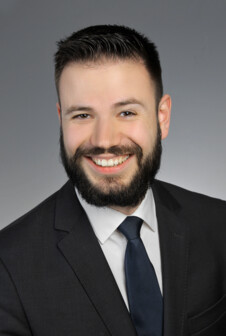
- Referent: Dr. Máté Imre Huber, University of Szeged (Hungary)
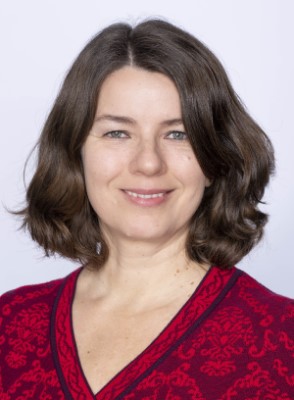
- Diskutantin: Prof. Dr. Edina Krompák, PH Luzern
Studierende, Dozierende, Forschende, Lehrpersonen und weitere Interessierte sind herzlich eingeladen, an der Ringvorlesung teilzunehmen.
Kontakt
Prof. Dr. phil.
Frohburgstrasse 3
6002 Luzern
edina.krompak@phlu.ch
Portrait