
|
|
|
|
|
{{node.getProperty('name')}}
{{node.getProperty('organisation')}}
{{node.getProperty('street')}} {{node.getProperty('street2')}} {{node.getProperty('zip')}} {{node.getProperty('city')}} {{node.getProperty('email')}} Details |
{{node.getProperty('organisation')}} {{node.getProperty('street')}} {{node.getProperty('street2')}} {{node.getProperty('zip')}} {{node.getProperty('city')}} {{node.getProperty('email')}} |
Details |
|---|
| {{g.getLabel()}} | |
|---|---|
|
{{node.getProperty('title')}}
|
|
| mehr anzeigen von |
| Beschreibung | Nummer | Beginn | Buchbar | Typ | |||||||||||
|---|---|---|---|---|---|---|---|---|---|---|---|---|---|---|---|
|
|
|||||||||||||||
|
|||||||||||||||
| Beschreibung | Nummer | Buchbar | Typ | |||||||
|---|---|---|---|---|---|---|---|---|---|---|
|
||||||||||
| Beschreibung | Nummer | Buchbar | Typ | |||||||||
|---|---|---|---|---|---|---|---|---|---|---|---|---|
|
||||||||||||
| Projektname | Schwerpunkte |
|---|---|
|
{{node.getProperty('title')}}
Schwerpunkte
|
|
|
|
|
|
Sustainable Language Education, Technology and Social Justice: Fostering Critical Studies and Dialogues in Brazilian Research Contexts
Im F&E-Kolloquium hält Prof. Dr. Cláudia Hilsdorf Rocha von der State University of Campinas (Brazil) ein Refarat zum Thema «Sustainable Language Education, Technology and Social Justice: Fostering Critical Studies and Dialogues in Brazilian Research Contexts». Das F&E-Kolloquium wird in Englisch abgehalten.
- Wann:
- Dienstag, 15. September 2026, 17.15 Uhr bis 18.45 Uhr
- Wo:
- Sentimatt (SE)
SE 205
This presentation aims at critically presenting the main results of two ongoing projects that intersect by focusing on the relationship between additional language learning, critical education and sustainable technological resources. The theoretical framework is based translanguaging and decolonial principles, as well as committed to social, linguistic, cultural, epistemic, and planetary justice. Both research projects are linked to the Research Group Language Education, Virtuality and Sustainability (CNPq/UNICAMP) and coordinated by Dr Cláudia Hilsdorf Rocha.
The first study aims at investigating and processes in artificial intelligence for decolonial learning in contexts of vulnerability in Brazil and in the UK (CNPq/Brazil/443985/2024-3) and involves the collaboration of Dr Angelo Martins Jr (University of Birmingham, UK). The project involves the participation of a multidisciplinary and interinstitutional group of Brazilian researchers to investigate the potentialities of Artificial Intelligence (AI) in socially engaged initiatives aimed at fostering sociopolitical rights, language learning, and language awareness in scenarios linked to crisis migrants and/or other socioeconomically disadvantaged groups. The second research initiative focuses on the critical, multimodal, socially just teaching of additional languages in virtual contexts in Brazilian Higher Education (CNPq/Brazil/ 307149/2023-4).
Both studies to be presented draw on the concept of language as a powerful tool to confront dominant power. The role of generative technologies in times of planetary devastation, genocides and increasing authoritarianism is likewise treated critically to develop more informed approaches regarding its use in the creation of cultural artifacts capable of contributing to social and language (learning) empowerment. Sustainability is also a cross-theme, aiming at fostering ways to entangle language (education), technology, migration, and international mobility. Both research initiatives are deeply concerned with diversity and criticality, and by means of the ongoing studies we hope to collaborate in terms of sharing liberating educational and research experiences and of nurturing dialogues and transformative praxis in the fields of Applied linguistics, Social Sciences, Teacher Education, and other related ones!
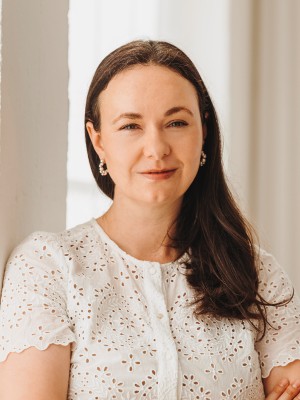
- Referentin: Prof. Dr. Cláudia Hilsdorf Rocha, Professor at the Applied Linguistics Department, Institute of Language Studies, State University of Campinas, Brazil
- Diskutantin: Prof. Dr. Edina Krompák, PH Luzern
Kontakt
Sentimatt 1
6003 Luzern
rosanna.schaufelberger@phlu.ch