
|
|
|
|
|
{{node.getProperty('name')}}
{{node.getProperty('organisation')}}
{{node.getProperty('street')}} {{node.getProperty('street2')}} {{node.getProperty('zip')}} {{node.getProperty('city')}} {{node.getProperty('email')}} Details |
{{node.getProperty('organisation')}} {{node.getProperty('street')}} {{node.getProperty('street2')}} {{node.getProperty('zip')}} {{node.getProperty('city')}} {{node.getProperty('email')}} |
Details |
|---|
| {{g.getLabel()}} | |
|---|---|
|
{{node.getProperty('title')}}
|
|
| mehr anzeigen von |
| Beschreibung | Nummer | Beginn | Buchbar | Typ | |||||||||||
|---|---|---|---|---|---|---|---|---|---|---|---|---|---|---|---|
|
|
|||||||||||||||
|
|||||||||||||||
| Beschreibung | Nummer | Buchbar | Typ | |||||||
|---|---|---|---|---|---|---|---|---|---|---|
|
||||||||||
| Beschreibung | Nummer | Buchbar | Typ | |||||||||
|---|---|---|---|---|---|---|---|---|---|---|---|---|
|
||||||||||||
| Projektname | Schwerpunkte |
|---|---|
|
{{node.getProperty('title')}}
Schwerpunkte
|
|
|
|
|
|
Ringvorlesung «Sprache – gender – identité»
Die dritte Ringvorlesungsreihe des Instituts für Fachdidaktik der Sprachen und Bildungslinguistik (ISB), durchgeführt in Kooperation mit den Prorektoraten Forschung und Entwicklung sowie Ausbildung, widmet sich dem Zusammenspiel von Sprache, Gender und Identität und dessen Bedeutung für die sprachliche Bildung. Dabei wird aus internationaler Perspektive beleuchtet, welche Verantwortung Bildung und schulische Akteur*innen in diesem Diskurs tragen.
Studierende, Dozierende, Forschende, Lehrpersonen und weitere Interessierte sind herzlich eingeladen, an der Ringvorlesung teilzunehmen. Die Vorlesungsreihe findet im Uni/PH-Gebäude statt.
12 Big Questions School Must Answer to Imagine Irresistible Futures
- Montag, 9. März 2026, 17.15-18.45 Uhr
- Raum: UP Hörsaal 6
- Referentin: Homa Tavangar
- Diskutantin: Dr. Christiane Charon, PH Luzern
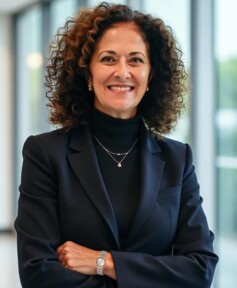
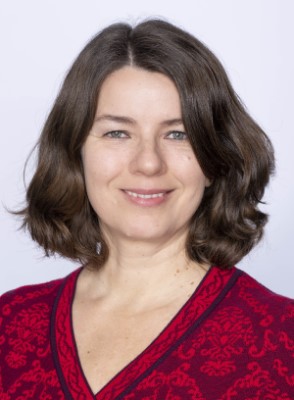
This session offers a guided exploration the 2025 ebook release on 12 Big Questions (free download here), following the popular 9 BIG Questions Schools Must Answer to Avoid Going "Back to Normal" (*Because "Normal" Wasn't That Great to Begin With) by Homa Tavangar and Will Richardson. The big questions are being used as a provocation to drive meaningful and fearless inquiry around school change and efficacy in the midst of volatile, uncertain, complex, ambiguous (VUCA) conditions in the world and in education.
Through probing, interactive activities we will audit and explore questions such as What is Learning? Why Do We ______? Who is Unheard? and Are We OK? as well as the three new questions: What is Your Story? What is Success? and What is Your Legacy? Embarking on a systematic interrogation of key questions, our “why” becomes clearer, to unlock new “how’s” for steering schools through crisis and uncertainty.
Inclure sans (s’)exclure : une question de style ?
- Freitag, 20. März 2026, 13.15-14.45 Uhr
- Raum: UP 2.A07/2.A10
- Referentin: Dr. Stéphanie Pahud, Université de Lausanne
- Diskutantin: Katharina Oechslin, PH Luzern
« [Les] lois de la langue sécurisent le sujet qui parle mais en revanche, elles le lui font payer comme toujours. Quand on procure de la sécurité à quelqu’un, on la lui fait payer. Et la langue fait payer la sécurité qu’elle procure au sujet en imposant de l’extérieur un mode d’être au sujet, un mode de subjectivité. »
(Roland Barthes, Le Neutre. Cours au Collège de France 1978, Paris, Seuil, 2023, p. 119)

Comme nous l’avons suggéré avec Pascal Singy dans Pas de langue de bois ! (2024), dans un contexte où une ambition globale – d’intensité et de types de réalisation variables – de bien-veillance, d’inclusion et d’émancipation de touxtes irrigue les sphères militante, institutionnelle, politique, citoyenne, intime, il semble propice de résister à la tyrannie idéologique d’un seul « bon » et « vrai » français, et de tendre, dans une perspective éthique, à prendre conscience des modalités langagières de (notre) subjectivation et à (nous) donner les moyens d’une appropriation individuelle d’une variété de langue qui soit la plus ajustée possible aux expériences, aux désirs, aux capabilités, aux vulnérabilités, aux émotions et aux actions de chacun·e.
C’est ainsi dans une perspective sociolinguistique caring que s’inscrit cette communication, qui sera à la fois « située », « déterritorialisée » (Deleuze, 2003) et « in(ter)disciplinée ». Au-delà de présenter une diversité de stratégies possibles (littéraires, médiatiques, institutionnelles, ordinaires) en matière de communication inclusive et de questionner leur efficience ainsi que leur(s) résonance(s), je proposerai une réflexion plus globale sur les fonctions de la langue ainsi que sur la dynamique variationnelle : aux cinq types de variation(s) classiquement retenus par les linguistes – « diachronique », « diatopique », « diaphasique », « diastratique » et « diamésique » (Gadet, 2007) – , en partant de la proposition d’Alpheratz (2018), j’argumenterai la pertinence d’en ajouter un sixième et de considérer une forme de variation diaéthique, répondant aux fonctions « identitaire » et « solidaire ». Je montrerai par ailleurs que les deux « problèmes » de la communication inclusive et du style gagnent, de la perspective sociolinguistique caring adoptée, à être communément théoriquement pensés et didactiquement amenés.
National Varieties of German in the Hungarian Education System: Advantages and Challenges of a Pluricentric Perspective
- Dienstag, 14. April 2026, 10.15-11.45 Uhr
- Raum: UP 2.B30
- Referent: Dr. Máté Imre Huber, University of Szeged (Hungary)
- Diskutantin: Prof. Dr. Edina Krompák, PH Luzern
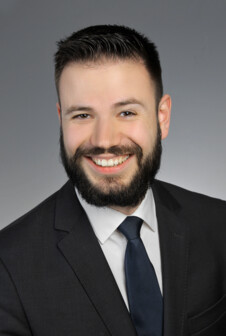
Linguistic pluricentricity (i.e. the presence of distinct national varieties within a certain language speaking area or linguaculture) has been a widely researched area in sociolinguistics since the early 1990s, and has important implications for language teaching. In this lecture, I address the advantages and challenges of applying this theoretical perspective to the situation of non-dominant varieties of German (such as the Austrian and Swiss national varieties) in teaching German as a foreign language in Hungary in the context of a complex research project. More specifically, I analyze the legal-institutional framework (i.e. curricula and examination requirements) and textbooks in terms of the presence of pluricentricity in them, which is complemented by an empirical investigation of teachers’ and learners’ beliefs, based on a questionnaire survey of 484 teachers and learners, as well as 37 interviews.
My empirical findings indicate that there is an undoubted predominance of Germany German over non-dominant national varieties, and a clear need to incorporate pluricentric presence in the aforementioned legal-institutional framework. Hungarian language learners seem to be more open to linguistic diversity than teachers, nevertheless, the interviews provide several counter-examples of teachers who devote a considerable degree of attention to pluricentricity.
The findings convey a relevant message for the Hungarian education system as a whole, with all its levels and components, including primary, secondary and tertiary education, teacher training, curriculum and textbook development, as well as the everyday classroom practices of teachers and students alike. It can be concluded from the above research results that the application of a pluricentric framework has a beneficial impact on language education, advocating for inclusion and an openness to linguistic variation while going against discrimination in general, however, it has strong limitations when it comes to its applicability to the more nuanced language situation for instance in Switzerland.
Language and the Politics of Gender
- Donnerstag, 23. April 2026, 10.15-11.45 Uhr
- Raum: UP 2.A07/2.A10
- Referent: Prof. Dr. Erez Levon, Universität Bern
- Diskutantin: Dr. Christiane Charon, PH Luzern
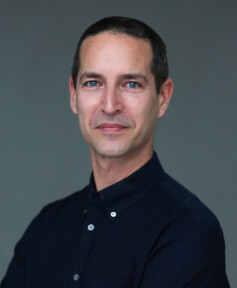
This lecture provides an overview of the relationship between language and gender politics. Following Cameron (2006), I see language as entering into gender politics in two primary ways. The first, and most explicit, is that language itself is sometimes that target of political attention. This is the case, for example, in conflicts relating to the labelling of people and categories (e.g., “lesbian”, “woman”). The second way that language enters into gender politics is when language acts as the medium through which dominant ideologies about “authentic” group membership are policed and enforced. Research on this more implicit role of language examines how certain personality traits come to be considered characteristic of particular social categories, how language comes to index the traits in question, and how both of these relationships influence observed patterns of language use. In the lecture, I provide an overview of key research in both of these areas. I also offer suggestions on how research on language and gender politics can be used and made relevant in the classroom.
Sprachbewusster Fachunterricht: Didaktische Massnahmen zur Verbesserung der Teilhabe an schulischer Bildung
- Dienstag, 5. Mai 2026, 17.15-18.45 Uhr
- Raum: UP Hörsaal 6
- Referentin: Prof. Dr. Claudia Schmellentin, PH FHNW
- Diskutantin: Dr. Silvia Frank, PH Luzern
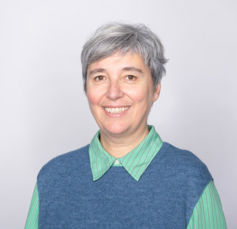
Die letzte PISA-Studie zeigt einmal mehr: Rund ein Viertel der Schüler*innen erreicht die basalen Lesekompetenzen nicht. Für diese Lernenden ist die schulische und damit langfristig auch die gesellschaftliche und berufliche Teilhabe stark eingeschränkt. Dieser Befund ist besorgniserregend, denn mit der Digitalisierung der Gesellschaft werden verstärkt sprachlich-literale Kompetenzen auf den höchsten Niveaustufen gefordert (z. B. Informationen kritisch prüfen). Diese Stufen erreichen allerdings nur sehr wenige Jugendliche. Sprachbewusster Fachunterricht hat zum Ziel, mittels (sprach-)didaktischer Massnahmen die Teilhabe an schulischer Bildung zu verbessern und sprachlich-literale Bildung mit Blick auf gesellschaftliche und berufliche Teilhabe durchgängig über verschiedene Bildungsstufen und -fächer hinweg zu organisieren. Sprachlich-literale Bildung als zentrale Querschnittsaufgabe von Schule darf jedoch nicht nur den Lehrpersonen allein übertragen werden, sondern erfordert weitere Entwicklungen auf allen Ebenen des Bildungssystems.
Kontakt
Prof. Dr. phil.
Frohburgstrasse 3
6002 Luzern
edina.krompak@phlu.ch
Portrait